
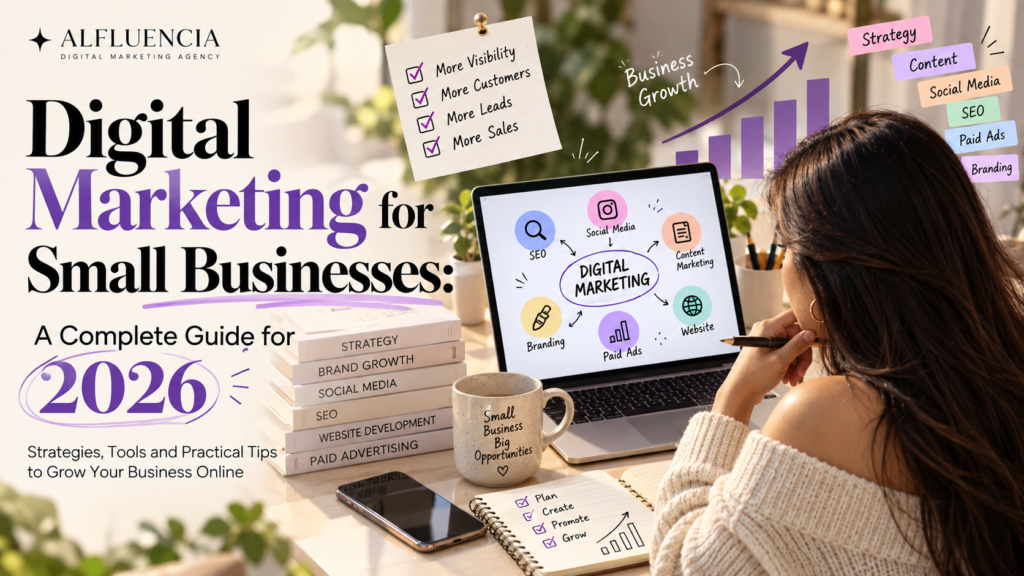
Digital Marketing for Small Businesses: A Complete Guide for 2026
Running a small business today involves much more than having a good product or service.
Customers increasingly discover businesses through search engines, social media, websites, online reviews and digital advertisements.
This is where digital marketing for small businesses becomes important.
A well-planned digital marketing strategy can help a business:
- Build online visibility
- Reach relevant audiences
- Generate leads
- Increase brand awareness
- Build customer relationships
- Promote products and services
- Create a professional online presence
But digital marketing isn’t about being everywhere.
The key is understanding where your customers are, what they search for and what information helps them make a decision.
At Alfluencia Digital Marketing Agency, we combine SEO, social media marketing, content creation, website development, paid advertising and branding to help businesses develop a stronger digital presence.
What Is Digital Marketing?
Digital marketing refers to promoting a business, product or service through digital channels.
These can include:
- Search engines
- Social media
- Websites
- Online advertising
- Content marketing
- Video platforms
- Local search
Unlike traditional marketing, digital marketing allows businesses to create different types of content and measure many aspects of their campaigns.
Why Is Digital Marketing Important for Small Businesses?
1. Customers Search Online
Before contacting a business, potential customers may search for:
“best digital marketing agency near me”
“footwear shop in Janakpuri”
“website designer in Delhi”
“SEO agency Delhi”
If your business doesn’t have a strong online presence, potential customers may discover competitors instead.
2. It Helps Build Brand Awareness
People rarely become familiar with a brand after seeing it once.
Consistent content across your website and social platforms can help communicate:
- Who you are
- What you offer
- What makes your business different
- Who your products/services are for
3. Digital Marketing Can Support Lead Generation
Your website and social media profiles can guide users toward actions such as:
- Contacting your business
- Requesting a quote
- Booking a consultation
- Sending a WhatsApp message
- Purchasing a product
- Signing up for an offer
The 6 Main Areas of Digital Marketing
1. Search Engine Optimization
SEO helps businesses improve their organic search visibility.
Important areas include:
- Keyword research
- On-page SEO
- Technical SEO
- Content optimization
- Internal linking
- Local SEO
2. Social Media Marketing
Social platforms can help businesses communicate directly with their audience.
Your strategy may include:
- Instagram Reels
- Carousels
- Stories
- Educational content
- Product content
- Behind-the-scenes content
- Community engagement
3. Content Marketing
Content marketing focuses on creating useful information for your target audience.
Examples include:
- Blog posts
- Videos
- Guides
- Tutorials
- Case studies
- Social media content
Google recommends creating content primarily to help people rather than creating large volumes of pages mainly to attract search traffic.
4. Website Marketing
Your website acts as your digital home.
A professional website should clearly communicate:
What you do → Who you help → Why choose you → What the visitor should do next
5. Paid Advertising
Businesses can use platforms such as Google and Meta to reach selected audiences.
Paid campaigns can support objectives such as:
- Awareness
- Traffic
- Leads
- Sales
- Remarketing
6. Branding
Branding creates consistency across your digital presence.
This includes:
- Logo
- Colors
- Typography
- Visual style
- Brand voice
- Messaging
How to Create a Digital Marketing Strategy
Step 1: Define Your Audience
Ask:
- Who are my customers?
- What problems do they have?
- Where do they search?
- What content do they consume?
Step 2: Define Your Goal
Examples:
- Increase website traffic
- Generate leads
- Increase sales
- Build awareness
- Grow social media presence
Step 3: Research Competitors
Look at:
- Their website
- Keywords
- Social media
- Content
- Offers
- Advertising
- Customer reviews
Step 4: Choose Your Channels
Don’t automatically choose every platform.
Choose channels based on where your audience actually spends time and searches for information.
Step 5: Create Content
Develop content around:
- Customer questions
- Problems
- Products
- Services
- Industry topics
- Search intent
Step 6: Measure Performance
Track appropriate metrics such as:
- Organic traffic
- Leads
- Engagement
- Click-through rate
- Conversion rate
- Cost per lead
How Alfluencia Can Help
At Alfluencia Digital Marketing Agency, we provide:
- SEO Services
- Social Media Marketing
- Website Design & Development
- Content Creation & Marketing
- Performance Marketing & Paid Ads
- Branding & Creative Design
Our goal is to connect these services into a digital strategy rather than treating them as completely separate activities.
Conclusion
Digital marketing is not simply about posting on Instagram or running advertisements.
It is about building a connected digital presence where your website, search visibility, content, social media, advertising and branding support your business goals.
For small businesses, starting with a clear strategy can make digital marketing more manageable and measurable.